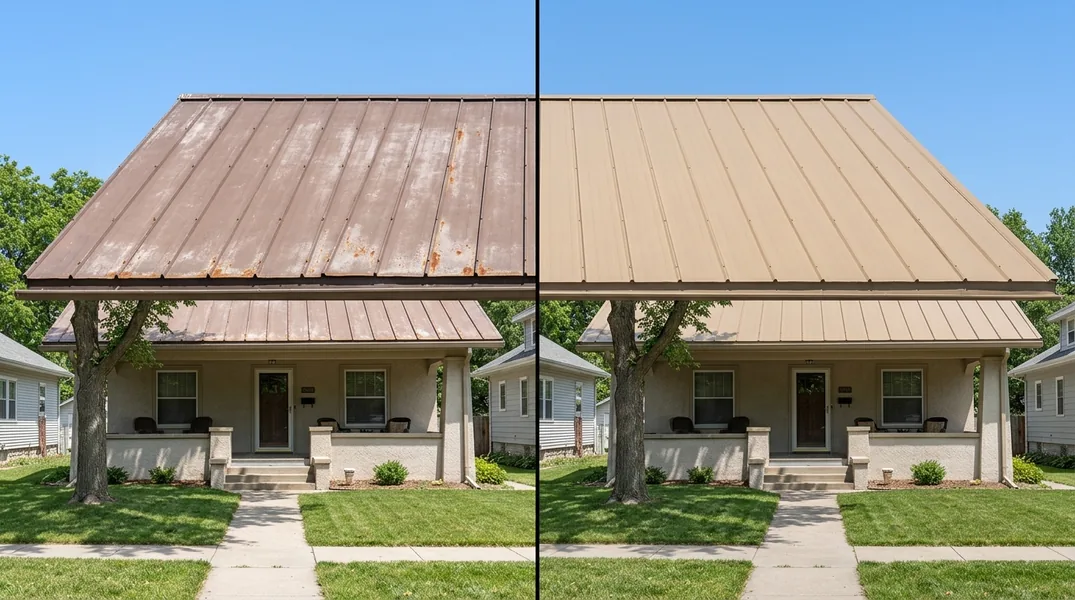
Why Nebraska Winters Are Hard on Any Roof
If you have lived in Lincoln for even a couple of winters, you know the pattern. A wet, heavy snow falls, temperatures hover right around freezing for days, then a sunny afternoon pushes the thermometer into the 40s before another Arctic front drops it back into single digits overnight. That constant swing between thaw and refreeze is what roofing professionals call freeze-thaw cycling, and it is quietly one of the most destructive forces a roof will ever face.
Asphalt shingles absorb some moisture at their edges and in the granular surface. When that moisture freezes, it expands, and repeated cycles loosen granules, crack shingle mats, and open tiny gaps around fasteners. Snow sitting on a shingle roof also melts unevenly because of heat escaping from the attic below, which is exactly how ice dams form at the eaves. Metal behaves very differently under the same conditions, and that difference matters a great deal for homeowners in Waverly, Hickman, and across the region.
How Metal Roof Snow Shedding Actually Works
One of the most useful properties of a metal roof in winter is its smooth, low-friction surface. Snow does not bond to a painted metal panel the way it grabs onto asphalt granules. Combined with the fact that metal reflects heat rather than absorbing it, snow tends to slide off in sheets once it accumulates to a certain depth or once the sun hits the panels. For a homeowner, that means less standing weight on the structure and far less opportunity for meltwater to back up under the roof edge.
There is a practical side to metal roof snow shedding that is worth planning for. Snow will land where it lands, so keep driveways, walkways, heat pumps, and gas meters clear of the drop zone, and consider snow guards above doorways and lower roof sections where sliding snow could be a nuisance. A properly installed Standing Seam Metal Roofing system, with raised seams that channel water and snow, is the gold standard for this climate. When we plan a Metal Roof Installation here, we look at roof pitch, prevailing winds, and where snow naturally piles up before recommending panel profiles and guard placement.
Metal Roof Ice Dams: What They Are and How Metal Reduces the Risk
An ice dam forms when heat escapes through the roof deck, melts the bottom layer of snow, and the meltwater refreezes at the cold eaves. The resulting ice ridge traps water behind it, and that water backs up under shingles, through the underlayment, and into ceilings and walls. It is one of the most common causes of winter water damage in older Lincoln homes. Metal roofing does not eliminate ice dams on its own, because the root cause is always attic heat, but the smooth surface and the way panels shed water quickly make a metal roof far less vulnerable than shingles to the backup and capillary action that cause leaks.
The real fix is a cold, well-ventilated roof assembly. That means proper intake and exhaust ventilation, a continuous air barrier, and adequate insulation so warm air stays in the living space instead of leaking into the attic. If you are considering a Metal Roof Replacement, this is the moment to correct ventilation and insulation deficiencies rather than simply covering them with new panels. We routinely find bath fans venting into attics and missing baffles in older homes, and correcting those issues during a roof project is far cheaper than repairing water damage later.
Metal Roof Insulation and the Freeze-Thaw Cycle
Metal roof insulation is the quiet hero of cold climate roofing. A metal panel over a properly insulated and ventilated deck keeps the roof surface closer to outdoor air temperature, which reduces melting from below and slows the freeze-thaw cycle on the panels themselves. Metal also has a low thermal expansion rate compared with many materials, and the fastening systems used in standing seam allow the panels to move slightly with temperature changes without stressing seams or penetrations. That is a big part of why metal holds up so well to Nebraska's wild temperature swings.
Insulation also controls condensation. In a cold climate, warm moist air from inside the house can condense on the underside of a cold roof deck, and over time that moisture rots sheathing and framing. A well-built metal roof assembly includes a proper underlayment and, where needed, a thermal break or rigid insulation layer to keep the deck warm enough to avoid condensation. If you want to understand how these details affect your project budget, our pricing page outlines the main cost drivers, and we are always happy to walk through the specifics of your home.
Metal Roof Winter Nebraska: Why It Outperforms Shingles
Homeowners often ask whether a metal roof is really worth it in a place like Nebraska. The honest answer is that metal is not magic, and a poorly installed metal roof can fail just like any other roof. But when it is installed correctly, metal offers real winter advantages: it sheds snow, it resists ice dam damage, it does not crack or lose granules in freeze-thaw cycles, and it lasts decades longer than asphalt. In a climate where a shingle roof may need replacement every 15 to 20 years, a metal roof's service life can span multiple shingle cycles, which changes the long-term math considerably.
Many Lincoln homeowners also choose a Metal Roof Over Shingles (Retrofit) when the existing roof is still structurally sound. This approach can reduce tear-off labor and landfill waste, but it requires careful evaluation of the deck, the existing ventilation, and local code requirements. It is not the right choice for every home, and we will tell you honestly when a full tear-off is the better path. For homes in Bennet and throughout the area, we assess each roof individually rather than applying a one-size-fits-all recommendation.
Metal Roof Installation Near Me: When to Call a Pro
Winter roof problems often announce themselves in ways that are easy to ignore: a small water stain on a ceiling, icicles hanging from the same eave every year, or granules collecting in the gutters. Those are signals that the roof assembly is struggling, and in a freeze-thaw climate they tend to get worse rather than better. If you are searching for metal roof installation near me and want a straight assessment of whether metal makes sense for your home, the best first step is a professional inspection rather than a guess based on curb appeal.
At Lincoln Metal Roofing, we serve homeowners throughout Lincoln and the surrounding communities, and we are happy to answer questions about snow shedding, ice dams, insulation, and what a metal roof would realistically cost for your house. You can reach us at (402) 858-4652 or request a free estimate online. A metal roof is a long-term investment, and the right installation details are what make it perform through Nebraska winters year after year.
Looking for a professional metal roofing contractor in Lincoln? Lincoln Metal Roofing responds fast for all your metal roofing needs.
Get a Free QuoteOur services: Metal Roof Installation · Standing Seam Metal Roofing · Metal Roof Replacement